My subjects are almost exclusively out in nature. And since I often don’t know what I want to shoot, I spend a lot of time on foot (inspiration is everywhere, after all!). Depending on how many subjects I find, that can easily turn into a 15 km hike. Having lightweight gear makes all the difference.
I’ve spent ages dialing this in, and my kit has been through countless iterations. Right now, it’s pretty light—under eight kilograms for a medium format camera with zoom lens, tripod, filters, batteries, remote, and backpack! Given the sensor size, I’m really happy with that.
Getting to a lightweight setup is a journey. You start asking yourself: What do I actually need, and how often? Do I really need an ultra-wide and a super telephoto? To answer that, I went through the metadata in my photos and discovered that for my work, a 20-70mm range (full-frame equivalent) covers everything. Sure, there’s the odd shot in my portfolio with a wider angle, but those are edge cases. It’s rare that I can’t just take a few steps back.
Here’s the thing: if you’re hauling around too much gear and end up exhausted, you won’t even feel like shooting anymore. So what’s the point? That’s why I’m always looking to shave off every unnecessary gram.
Recently I was talking with a good friend, Jens, who’s also streamlining his gear, and we realized we had a lot in common. But he’s not out there photographing—he’s doing multi-day backcountry trips and rock climbing! When it comes to gear, he’s even more obsessive. The problem is ultralight equipment is crazy expensive!
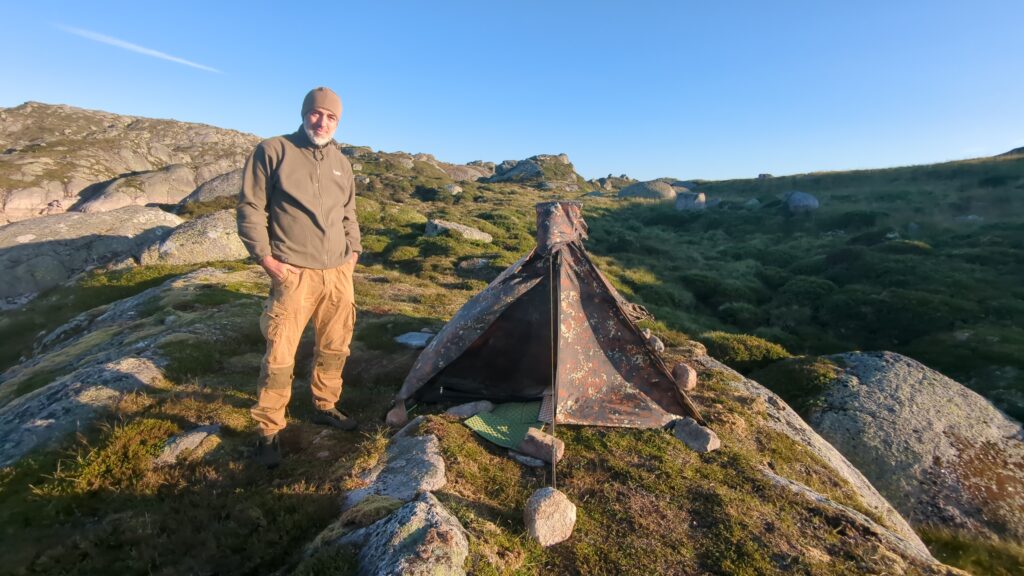
The solution? DIY! Talking to him was like chatting with the head of R&D at a startup. So much knowledge and experience about what works and what doesn’t. Things like: Which materials work for which applications? How much freedom of movement will I have? How can I use something for multiple purposes, like tarps? His enthusiasm really comes through in his ideas.
Together with a like-minded friend, he started Open Nature Gear. They’re not just hacking off-the-shelf equipment for their needs—they build complete prototypes of carrying vests. The concept is to share their innovations and passion with makers and outdoor enthusiasts through videos. They want to make their designs simple and accessible to everyone with instructions, plans, and patterns.
All this takes not just time but also money for quality materials like paracord, mesh, and fasteners. So they’ve launched a Patreon. I back the project myself and can’t recommend it enough for anyone who doesn’t want to drop a fortune on off-the-shelf outdoor gear. Let’s be real: there’s always room for improvement!
Check out their videos on YouTube.
They’re also on Facebook and Instagram.
FYI: their website and videos are in German.